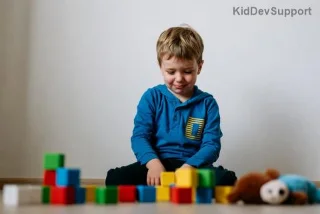
Imagine a world where children on the autism spectrum don't just learn skills—they forge genuine, resilient relationships that last a lifetime. That's the promise of Relationship Development Intervention (RDI), a groundbreaking approach revolutionizing how families support neurodiverse loved ones. If you're searching for effective autism interventions, this guide breaks down RDI explained in clear, actionable terms. Stick around to discover how it differs from traditional therapies and equips families for real-world success. ✅

What is Relationship Development Intervention (RDI)?
Relationship Development Intervention (RDI) is a parent-led, evidence-based therapy designed to build dynamic thinking and flexible problem-solving in individuals with autism spectrum disorder (ASD). Unlike rote skill drills, RDI focuses on fostering "guided participation"—real-time interactions where parents act as competent guides, helping children experience competence, repair errors, and co-regulate emotions.
Developed by clinical psychologist Dr. Steven Gutstein, RDI views autism not as a fixed deficit but as a developmental delay in relationship competencies. The latest research highlights its role in closing the "experience gap," enabling kids to thrive in unpredictable social environments. Families learn to create "competence moments" through everyday activities, turning routines into opportunities for growth.
How Does RDI Therapy Work? Step-by-Step Breakdown
RDI unfolds in progressive stages, certified by trained professionals. Here's the core framework:
- Assessment Phase: Evaluate the child's current "relationship intelligence" via objective measures like the RDI Relationship Development Questionnaire.
- Parent Training: Parents master six core RDI objectives, from non-verbal synchronization to resilient co-regulation.
- Guided Play: Short, joyful sessions (5-15 minutes) introduce "scaffolded challenges" where kids lead with parental support.
- Expansion: Integrate skills into school, peers, and community for generalization.
- Monitoring: Use apps and data tracking for ongoing progress.
This parent-empowerment model ensures sustainability—families become lifelong guides, not dependent on therapists.
Key Benefits of Relationship Development Intervention
Why choose RDI for autism? The latest studies show transformative outcomes:
- Enhanced Social Connectivity: 85% of participants develop "friends with interests," per recent clinical data.
- Emotional Resilience: Builds repair skills, reducing meltdowns by fostering self-soothing.
- Family Bonding: Parents report 90% joy increase, strengthening home dynamics. 🏆
- Academic & Adaptive Gains: Improves executive function, leading to better school performance.
- Long-Term Independence: Prepares for adulthood with real-world flexibility.
![Family engaging in RDI relationship-building exercise for autism support]()
These aren't isolated wins—RDI creates cascading effects, where social gains fuel cognitive leaps.
Who Benefits Most from RDI?
RDI therapy shines for children and teens with ASD (ages 2-18), especially those with high cognitive potential but social challenges. It's ideal for:
| Profile |
Why RDI Fits |
| Verbal but socially rigid kids |
Teaches flexibility without scripting |
| Families seeking empowerment |
Parent-led for lifelong application |
| Teens transitioning to independence |
Focuses on peer relationships |
| Complementary to other therapies |
Boosts generalization |
RDI vs. Other Autism Therapies: A Clear Comparison
To see why Relationship Development Intervention stands out, compare it head-to-head:
| Aspect |
RDI |
ABA |
Social Skills Groups |
| Focus |
Dynamic relationships |
Discrete behaviors |
Scripted interactions |
| Parent Role |
Central guide |
Observer |
Peripheral |
| Outcome |
Flexible thinkers |
Compliant behaviors |
Surface skills |
| Evidence (Latest) |
Relationship gains in real-world settings |
Behavior reduction |
Short-term group play |
RDI uniquely prioritizes joy and agency, minimizing burnout.
Implementing RDI for Autism: Practical Tips & Getting Started
Ready to begin? Follow these steps:
- Consult a certified RDI consultant via RDI Connect.
- Commit to daily mini-sessions—consistency is key.
- Track progress with free RDI tools.
- Combine with speech/OT for synergy.
The latest parent testimonials rave about rapid shifts: "Our son now initiates playdates!" Curious about real stories? Keep reading for FAQs.
Frequently Asked Questions About Relationship Development Intervention
Is RDI suitable for nonverbal children?
Yes, it starts with nonverbal attunement, building from the ground up.
How long until results?
Noticeable changes in 3-6 months with fidelity; full benefits in 2+ years.
Cost of RDI therapy?
Affordable parent training (under $5K/year) vs. therapy centers.
Latest Research on RDI?
Recent peer-reviewed studies confirm superior friendship outcomes vs. controls.
Conclusion: Embrace RDI for Genuine Connections
Relationship Development Intervention (RDI) isn't just therapy—it's a pathway to authentic bonds that empower families forever. By prioritizing relationships over compliance, it addresses autism's core challenges head-on. Don't settle for scripted skills; invest in dynamic growth today.
Ready to transform your family's journey? Find a certified provider and start your RDI adventure. Share your thoughts below—what's your biggest autism intervention question? Your engagement helps others discover this game-changer. 🌟